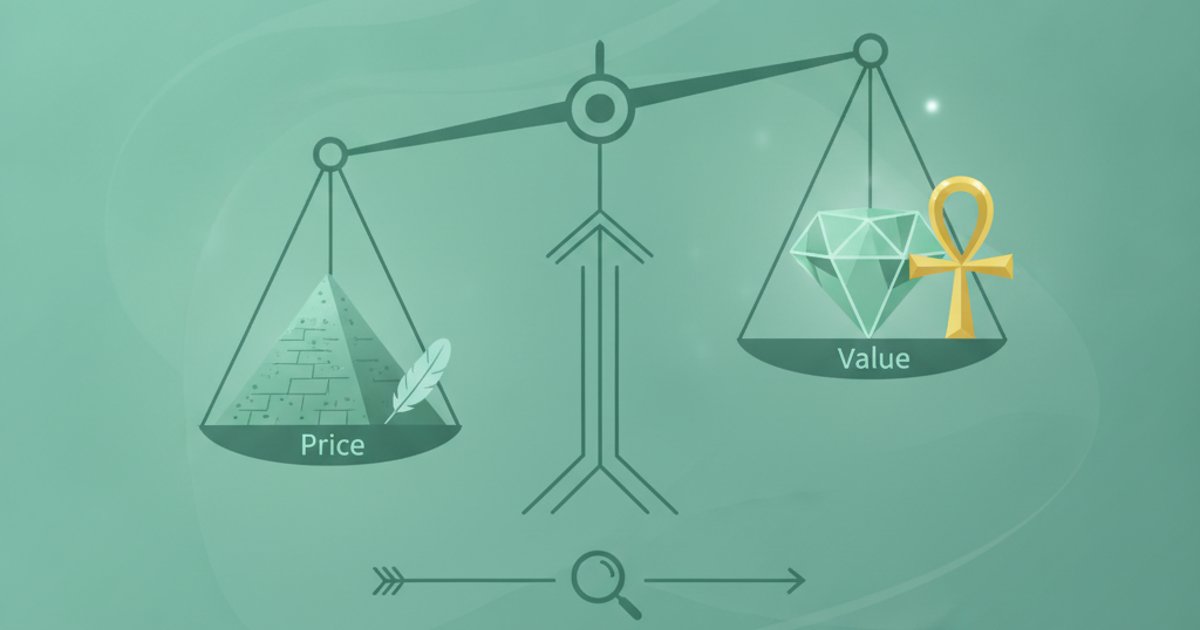
Every investor asks: is this stock cheap or expensive? Price alone doesn't answer — an EGP 5 stock can be more expensive than an EGP 200 one. What matters is price relative to value.
Tools to measure value
- P/E ratio: price ÷ earnings per share. A low P/E can mean cheap — or a problem. Compare it to the sector average. Details in the financial-metrics guide.
- Price-to-book (P/B): price vs the company's net assets — useful for banks and asset-heavy firms.
- Dividend yield: annual dividend ÷ price. A high yield can flag a cheap stock — review the highest-yield stocks (and beware a yield that's high only because the price fell).
Fair value
Fair value estimates what a stock is "worth" based on its earnings and expected growth. If the price is clearly below fair value the stock may be undervalued, and vice versa. egxbot offers a fair-value tool and an undervalued-stocks screener.
Beware the "value trap"
Not every cheap stock is an opportunity; sometimes it's cheap for a reason (falling earnings, management issues). Combine valuation with technical analysis and the earnings trend before deciding. See the rating and analysis for every stock.
Frequently asked questions
Does a low share price mean the stock is cheap?
No — cheapness is measured by price relative to value (like P/E and fair value), not the absolute share price.
What is a value trap?
A stock that looks cheap on valuation metrics but is cheap for a real reason (e.g. deteriorating earnings) and keeps falling.
Apply it with egxbot
Get real-time analysis, signals and a bilingual AI assistant for Egyptian Exchange stocks — free to start.
Start free on Telegram